Beauty Rival – AI beauty technology personalizing skincare to your skin’s needs is reshaping how people care for their skin by offering personalized solutions based on individual skin characteristics. By analyzing factors like skin texture, hydration levels, and environmental influences, AI‑driven skincare brings science and personalization together. In this article, we explore how AI beauty technology is transforming skincare, making routines smarter, more effective, and truly tailored to each person.
“Read Also: Perfume Milks The New Trend in Skincare Fragrance“
What Is AI Beauty Technology?
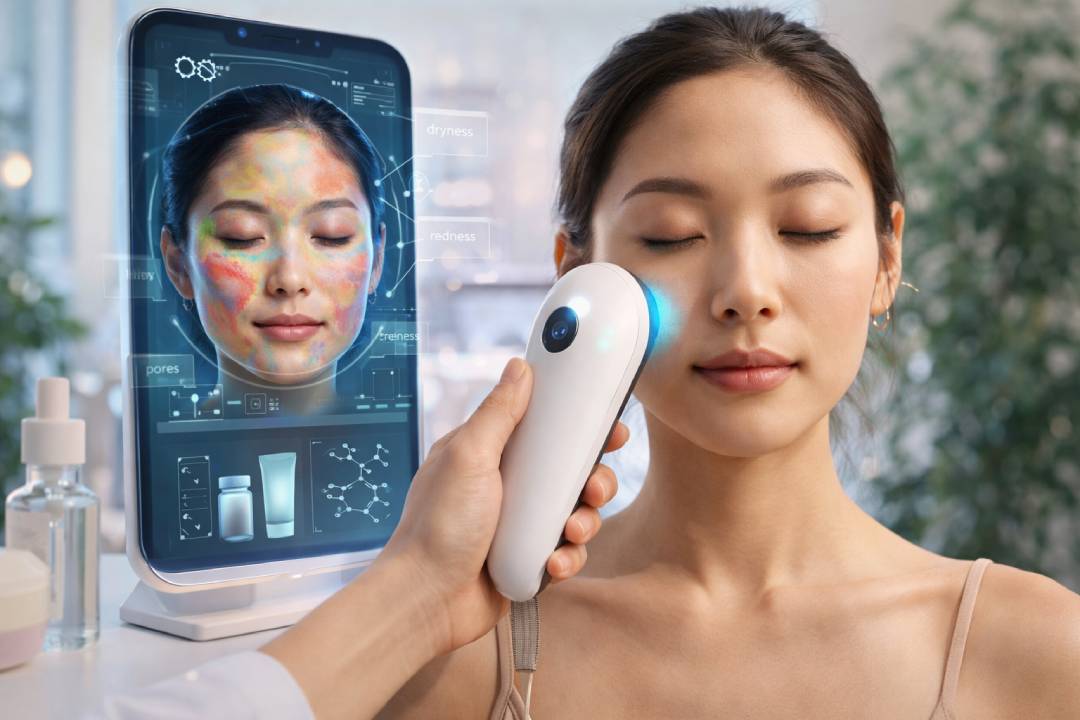
AI beauty technology refers to the use of artificial intelligence to analyze skin data and recommend skincare products or routines accordingly. Through tools like smartphone apps, facial scans, or smart devices, AI evaluates skin conditions such as dryness, oiliness, wrinkles, redness, and more. Unlike traditional methods that rely on broad categories like “oily” or “dry,” AI can detect subtle nuances and suggest products that specifically address the root concerns. This shift is empowering users to stop guessing and start caring for their skin with confidence.
How AI Personalizes Skincare
AI personalization begins with data collection, often through a photo or short questionnaire. Advanced algorithms then process this data, comparing it against vast databases of skin types and product formulations. Based on this analysis, the technology recommends specific serums, moisturizers, or routines tailored to your unique needs. Because no two complexions are exactly alike, this approach is far more precise than guessing based on general skin type. Additionally, many AI beauty platforms update recommendations over time as your skin changes with seasons, age, or lifestyle habits.
Benefits of AI‑Driven Skincare
One of the biggest advantages of AI beauty technology is its precision. Users no longer have to rely on trial and error, which can be both costly and frustrating. Instead, AI delivers evidence‑based recommendations that respond directly to your skin’s needs. Another benefit is convenience, your routine becomes easier to manage because you’re given products and steps that truly match your profile. Moreover, some platforms offer progress tracking, allowing you to visually monitor improvements and adjust your routine as needed.
AI Beauty Tools in the Market
Today, many brands and tech companies are integrating AI into their skincare offerings. From apps that scan your skin using your phone camera to devices that measure hydration and elasticity, these tools are making personalized care accessible. For instance, some apps recommend products after capturing a selfie, while smart mirrors can analyze skin health in real time. Such innovations make skincare feel less intimidating and more approachable for users of all experience levels.
The Human Touch Balancing Technology and Expertise
While AI technology offers remarkable precision, it doesn’t replace human expertise. Dermatologists and skincare professionals still provide crucial insights, especially for serious or persistent issues. The best approach combines AI’s analytical power with expert guidance to ensure recommendations are safe and effective. In this way, AI enhances professional care rather than replaces it, giving users the best of both worlds.
“Read Also: Gen Z Fashion Trends Sustainability, Creativity, and“
Real User Experiences and Insights
Many users who have embraced AI‑personalized skincare report higher satisfaction and better outcomes compared to previous routines. For example, individuals with combination skin, often hard to classify accurately, have seen clearer improvements when using AI‑guided regimens. These real‑world experiences highlight how AI can adapt to unique challenges that standard products often overlook. Furthermore, testimonials frequently mention increased confidence and a sense of empowerment in managing one’s skincare journey.
Challenges and Considerations
Despite the many benefits, AI beauty technology faces challenges. Data privacy is a common concern, as skin scans and personal information must be handled securely. Additionally, AI algorithms depend on the quality of data they are trained on, meaning biases or gaps in datasets can affect recommendations. Users should also be mindful that not all products suggested by AI will suit everyone, particularly those with sensitive skin or allergies. Therefore, understanding your skin and listening to how it responds remains essential.
The Future of Personalized Skincare
Looking ahead, AI beauty technology is poised to become even more advanced. Integration with wearable devices, real‑time environmental and lifestyle tracking, and deeper learning algorithms could refine personalization further. As the beauty tech industry grows, users may soon receive skincare recommendations that adjust automatically based on hormonal cycles, weather changes, or even stress levels. Ultimately, AI’s role in skincare is just beginning, and it promises a future where routines are as unique as the people who use them.