Beauty Rival – The Hunger Games red carpet is becoming a fascinating showcase of fashion and cinematic storytelling. As excitement builds around The Hunger Games: Sunrise on the Reaping, the cast’s promotional wardrobe is attracting attention. Rather than choosing traditional eveningwear, the stars are embracing designs inspired by the film’s fictional world. Dramatic silhouettes, striking accessories, and carefully selected colors bring familiar characters into the spotlight. Meanwhile, fashion enthusiasts are discovering how clothing can extend a movie’s visual identity. This approach reflects the growing popularity of method dressing in modern entertainment. More importantly, it transforms promotional appearances into memorable fashion moments. Every outfit offers another opportunity to connect audiences with the story. Consequently, the red carpet becomes more than a glamorous event. It becomes an extension of the cinematic experience itself.
Method Dressing Creates a Stronger Connection Between Fashion and Film
Method dressing has become one of the most recognizable trends in celebrity fashion. The concept involves wearing outfits that reflect a movie’s characters, themes, or visual atmosphere. Unlike conventional red carpet styling, this approach places storytelling at the center of fashion choices. For example, an actor portraying a futuristic character might wear metallic fabrics or architectural silhouettes. Similarly, a romantic film may inspire softer colors and delicate textures. However, successful method dressing requires more than copying a costume. Designers and stylists must translate fictional elements into wearable fashion statements. Therefore, the strongest looks balance creativity with personal style. The Hunger Games offers especially rich inspiration because clothing already plays an important role in its fictional society. As a result, its promotional fashion feels closely connected to the story.
Elle Fanning Brings Effie Trinket’s Extravagant Style Into Focus
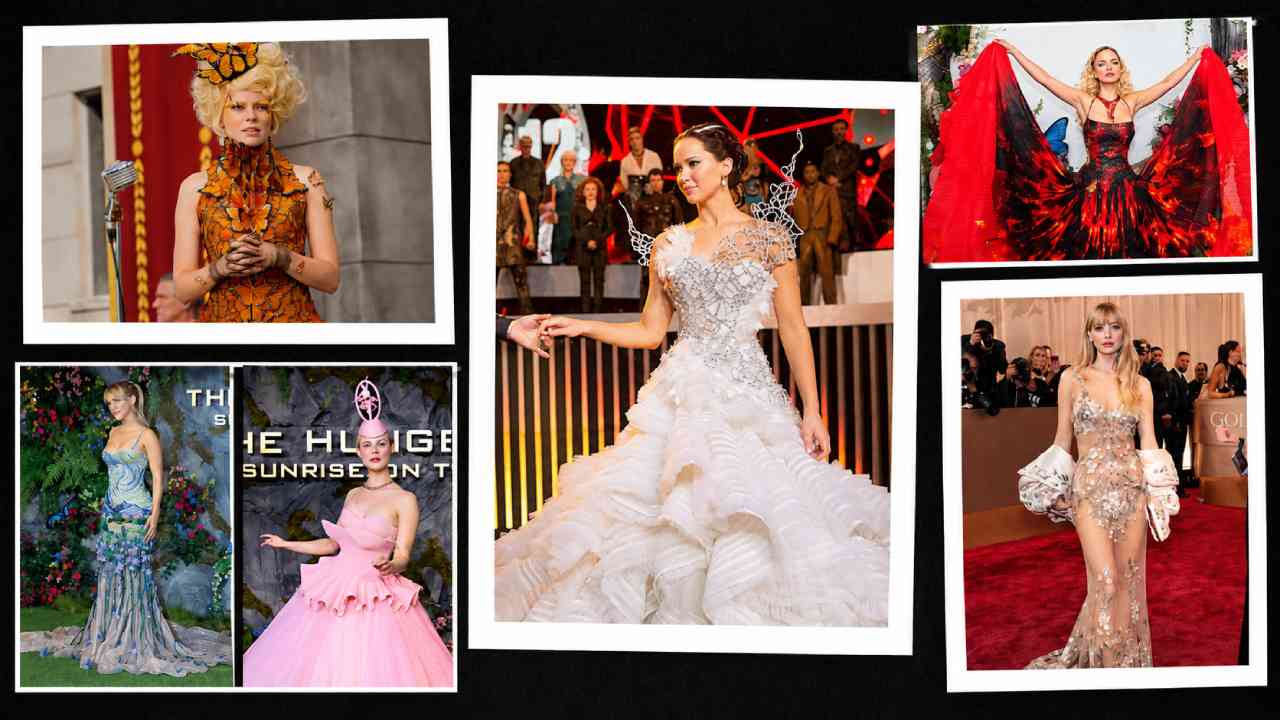
Elle Fanning’s portrayal of a younger Effie Trinket creates an exciting opportunity for expressive red carpet fashion. Effie has always represented the theatrical elegance of the Capitol. Her signature style combines playful details, exaggerated shapes, and unexpected accessories. Naturally, this character provides plenty of inspiration for contemporary couture. Fanning’s promotional wardrobe explores that visual language through feminine silhouettes and dramatic styling. Pink tones, sculptural details, and decorative headpieces help capture Effie’s distinctive personality. However, the outfits do not simply recreate familiar costumes. Instead, they reinterpret the character through modern designer fashion. This distinction makes the looks appealing beyond the film’s audience. Moreover, Fanning’s polished presentation gives the theatrical elements a refined finish. Her appearances demonstrate how character-inspired styling can feel imaginative without losing its fashion identity.
Read Also: Jesse Jo Stark Reveals Heartbreak Behind Her New Album MUSE
Mckenna Grace Revisits the Symbolism of Katniss Everdeen
Mckenna Grace brings another perspective to the Hunger Games fashion conversation. Her promotional styling draws attention to the visual legacy of Katniss Everdeen. In the original films, Katniss became closely associated with fire-inspired costumes and transformative fashion moments. Those designs represented courage, public image, and resistance. Consequently, flame motifs and dramatic gowns carry recognizable meaning for longtime fans. Grace’s fashion choices explore these connections while introducing a fresh interpretation. Rather than treating the past as a strict template, the styling uses familiar imagery as creative inspiration. This approach creates a bridge between different generations of the franchise. Meanwhile, audiences can recognize visual references without seeing identical costumes. The result highlights fashion’s ability to preserve cinematic memories while allowing new personalities to emerge.
The Capitol’s Extravagant Aesthetic Inspires Modern Couture
The fictional Capitol remains one of the most visually distinctive elements of The Hunger Games. Its fashion culture celebrates excess, theatrical beauty, and bold individuality. Elaborate hairstyles, unconventional makeup, and dramatic clothing establish a world where appearance communicates social status. Interestingly, these ideas translate naturally into high-fashion presentations. Couture designers frequently experiment with sculptural forms, unusual proportions, and intricate craftsmanship. Therefore, the Capitol’s visual identity offers a rich foundation for editorial styling. A dramatic headpiece can suggest its extravagance without reproducing a costume. Likewise, layered fabrics and unexpected textures can evoke the same atmosphere. However, the connection also introduces a subtle contrast. What appears glamorous on the red carpet can symbolize inequality within the fictional story. That tension gives the fashion conversation additional depth.
Celebrity Fashion Becomes an Essential Part of Movie Promotion
Modern film promotion increasingly depends on memorable visual moments. Interviews and trailers remain important, but celebrity fashion now contributes to the wider conversation. A distinctive red carpet appearance can attract audiences who may not closely follow a film franchise. Furthermore, fashion photographs travel quickly across social platforms. Fans discuss designers, styling choices, and references to familiar characters. Consequently, a single outfit can generate attention beyond the event itself. The Hunger Games benefits from this connection because its fictional universe already places great importance on public presentation. In Panem, clothing helps shape how audiences perceive individuals. Similarly, promotional fashion influences how real-world viewers engage with a movie. Although the circumstances differ greatly, the shared emphasis on image creates an interesting parallel between fiction and entertainment marketing.
Barbie and Dune Helped Popularize Character-Inspired Red Carpet Looks
The current popularity of method dressing did not emerge overnight. Several major film promotions helped establish the approach as a recognizable fashion strategy. Margot Robbie embraced Barbie-inspired wardrobes during the promotion of Barbie. Her appearances featured playful colors and references to the doll’s fashion history. Meanwhile, Zendaya explored futuristic silhouettes while promoting Dune. These looks connected fashion choices with the atmosphere of their respective films. Additionally, the Wicked promotional appearances demonstrated how signature character colors can shape celebrity styling. Each campaign offered a different interpretation of the same idea. However, the most memorable outfits shared one quality. They communicated a recognizable visual story without requiring lengthy explanations. The Hunger Games continues this evolution through a more theatrical and symbolic fashion language.
Social Media Gives Red Carpet Styling a Wider Cultural Influence
Social media has changed how audiences experience celebrity fashion. Previously, red carpet coverage mainly reached viewers through entertainment programs and fashion publications. Today, individual outfits can circulate globally within minutes. Short videos reveal fabric movement, while close-up photographs highlight accessories and craftsmanship. Meanwhile, fan communities compare promotional looks with scenes from earlier films. These discussions create additional interest around styling decisions. For The Hunger Games, this digital environment encourages viewers to explore the connection between fashion and storytelling. However, online attention can also reward increasingly extravagant designs. As a result, stylists face pressure to create something visually unexpected. The challenge involves maintaining artistic purpose while attracting attention. A memorable look should communicate character and atmosphere rather than rely entirely on spectacle.
Can Method Dressing Remain Creative Without Becoming Predictable?
As method dressing becomes more common, its originality faces an interesting challenge. Audiences increasingly expect actors to dress according to their film characters. Consequently, an approach that once felt surprising may become part of standard promotional styling. This does not necessarily reduce its creative value. However, designers must find new ways to interpret familiar themes. Simply matching a character’s signature color may no longer feel distinctive. Instead, thoughtful styling can explore personality, symbolism, and the emotional atmosphere of a story. The Hunger Games offers opportunities for this deeper approach. Its costumes reflect identity, political power, and public perception. Therefore, fashion inspired by the franchise can communicate more than visual extravagance. The strongest interpretations reveal something meaningful about the fictional world while remaining relevant to contemporary style.
Hunger Games Fashion Shows How Storytelling Shapes Modern Style
The Hunger Games continues to demonstrate the powerful relationship between fashion and entertainment. Its red carpet appearances reflect a broader movement toward storytelling through clothing. Rather than separating personal style from cinematic identity, method dressing brings both elements together. Elle Fanning’s theatrical elegance and Mckenna Grace’s symbolic fashion references illustrate different possibilities within this trend. Meanwhile, designers gain opportunities to reinterpret familiar visual themes through contemporary craftsmanship. However, the future of method dressing will depend on creativity rather than extravagance alone. Audiences may appreciate dramatic outfits, but meaningful details often create stronger impressions. As fashion and film become increasingly connected, red carpet styling will likely continue evolving. The Hunger Games provides a compelling example of how clothing can build anticipation, express character, and extend a story beyond the screen.