Beauty Rival – Fashion often becomes most interesting when the seasons refuse to follow a simple calendar. During New York Fashion Week, that in-between feeling became part of the style story itself. Guests moved through the city wearing outfits that balanced the final ease of summer with the first hints of fall. Light skirts appeared beside structured jackets. Relaxed shirts met tailored trousers, while playful shoes kept polished looks from feeling too serious. Rather than following one dominant formula, street style showed how personal choices can shape transitional dressing. The result felt practical, expressive, and surprisingly wearable. More importantly, these outfits offered inspiration beyond Fashion Week. They suggested that changing seasons do not require an entirely new wardrobe. Instead, thoughtful layering, stronger accessories, and unexpected combinations can make familiar pieces feel relevant again. That approach gives transitional style a sense of freedom that feels especially suited to modern wardrobes.
Read Also: Tory Burch Turns Everyday Style Into a Reason to Dress Up
Transitional Fashion Becomes Part of the Main Event
The streets surrounding New York Fashion Week have become almost as visually important as the runways themselves. This season, transitional dressing helped explain why. Guests did not simply abandon summer pieces because fall was approaching. Instead, they adapted them. Lightweight fabrics appeared beside more substantial outerwear, creating outfits that acknowledged both seasons at once. This approach feels useful because real wardrobes rarely change overnight. A warm afternoon may still call for breathable clothing, while a cooler evening requires another layer. Therefore, transitional Fashion works best when flexibility becomes part of the outfit. A jacket can transform a simple skirt, while tailored trousers can give a lightweight top more structure. The appeal comes from contrast rather than perfect coordination. In my view, that makes these looks easier to translate into everyday life. Fashion Week can sometimes feel distant from ordinary wardrobes. However, these combinations offer ideas that people can recreate without rebuilding everything they already own.
Summer Pieces Find a New Life Beside Fall Layers
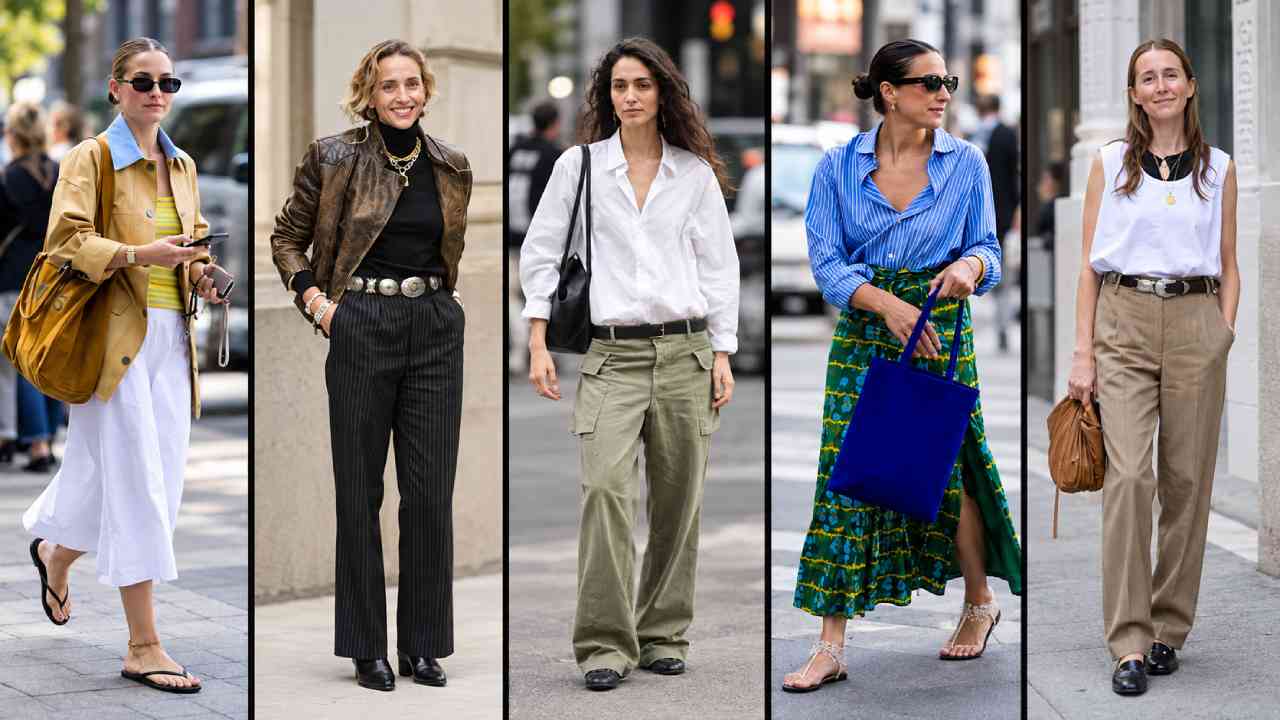
One of the strongest ideas seen around the shows involved keeping recognizable summer staples in rotation. Instead of storing them away, guests paired lighter pieces with clothing that carried more autumn character. A white poplin skirt, for example, could sit comfortably beside a barn jacket. Leather flip-flops kept the combination relaxed, while striped layers introduced a subtle retro feeling. This type of styling works because each piece serves a different seasonal purpose. As a result, the outfit does not look trapped in summer or rushed into fall. It occupies the space between them. That balance is particularly relevant during unpredictable weather. Moreover, it encourages people to think creatively about what they already own. A summer skirt does not suddenly become useless when temperatures fall slightly. Add texture, layering, or a stronger jacket, and its personality changes. Transitional Fashion becomes less about replacing clothes and more about finding another way to wear them.
Western Details Give City Outfits More Character
Western-inspired details also brought personality to New York’s street style. Yet the trend did not rely on dressing like a cowboy from head to toe. Instead, individual elements were placed inside modern city outfits. Worn leather jackets, statement belts, and prominent buckles added visual strength without overwhelming the rest of the look. Pinstriped trousers could sit beside rugged leather, creating a contrast between tailoring and Americana. This restrained approach makes the Western influence easier to wear. After all, a trend often feels more sophisticated when it appears as an accent rather than a costume. A belt can completely change the mood of simple trousers. Likewise, aged leather can soften an otherwise polished combination. Fashion becomes more personal when familiar references are interpreted rather than copied. That seems to be the larger lesson here. The strongest street-style outfits did not simply follow a theme. Instead, they borrowed recognizable details and placed them inside wardrobes that still felt individual.
Prints and Colors Break Away From Safe Styling
Minimal wardrobes have dominated many style conversations in recent years. However, New York Fashion Week also showed plenty of appetite for playful combinations. Stripes appeared beside florals, while unexpected colors gave familiar silhouettes more energy. Mixing patterns can easily become overwhelming, so balance remains important. One effective approach is to let each print operate at a different visual scale. A clean striped shirt, for instance, can work with a more expressive floral skirt because the patterns do not compete in exactly the same way. Meanwhile, simpler accessories can give the eye somewhere to rest. This approach makes bold Fashion feel considered rather than chaotic. It also challenges the idea that transitional wardrobes need to rely only on beige, brown, or other traditional fall shades. Summer color can remain useful well beyond August. In fact, carrying brighter pieces into another season may be exactly what makes an outfit feel fresh instead of predictable.
Relaxed Minimalism Offers a Quieter Alternative
Bold prints were not the only story happening outside the shows. At the opposite end of the spectrum, relaxed minimalism continued to look convincing. Loose white shirts, roomy cargo trousers, practical bags, and understated footwear created outfits with very little visual noise. Still, simplicity did not mean carelessness. Proportion became the key detail. An oversized shirt needs the right trousers and accessories to look intentional rather than unfinished. Likewise, a structured leather tote can instantly sharpen relaxed separates. This balance between comfort and polish is one reason minimalist Fashion remains relevant. It responds to the way many people actually live. Clothing needs to move from commuting to meetings, lunch, and evening plans without becoming uncomfortable. Therefore, an outfit built around easy silhouettes can be more useful than something overly complicated. The strongest minimalist looks prove that visual impact does not always require decoration. Sometimes, good proportions and a few carefully selected pieces communicate more than an outfit filled with obvious trends.
Easy Layering Makes Transitional Style More Practical
Layering is often associated with thick sweaters and heavy coats. Yet transitional dressing calls for something lighter. Around New York Fashion Week, simple layers created depth without making outfits feel bulky. Sleeveless tops could be worn over lighter base pieces, while tailored trousers brought structure underneath. Loafers and layered jewelry then helped finish the look. This formula works because every layer remains visible and purposeful. More importantly, pieces can be removed when temperatures rise. That practicality matters outside Fashion Week, where weather conditions can change dramatically throughout a single day. Good layering should solve a problem while also improving the outfit. Therefore, the best combinations are not necessarily the ones with the most pieces. Two well-chosen layers can create more visual interest than four competing ones. From a styling perspective, this is also an accessible way to experiment. Instead of buying something dramatically different, people can change how familiar items interact. That makes transitional Fashion both creative and economical.
Accessories Carry More Weight Between Seasons
Accessories become especially useful when an outfit sits between two seasons. Clothing may remain simple, but shoes, bags, belts, and jewelry can quickly change its direction. A substantial leather belt can introduce fall texture to a lightweight outfit. Meanwhile, playful footwear can preserve a sense of summer. Bags offer another opportunity to shift the mood without changing the main clothing pieces. This flexibility explains why accessories deserve attention in transitional Fashion. They allow people to respond to trends without committing to an entirely new wardrobe. Furthermore, smaller details often make an outfit memorable. Street style works particularly well as inspiration because photographers capture these choices in motion. A belt buckle catches the light. A bag changes the silhouette. Jewelry adds movement near the neckline. Individually, these details may seem minor. Together, they create personality. Therefore, anyone adapting Fashion Week ideas for everyday wear can start with accessories before making larger changes to their wardrobe.
Read Also: Beyoncé Expands Cécred With Temple Oud Hair Perfume
Personal Style Matters More Than Following One Trend
Perhaps the most refreshing part of New York Fashion Week street style is the absence of one rigid formula. Western references existed beside minimal tailoring. Florals appeared alongside stripes. Utility pieces shared space with polished accessories. These contrasts suggest that Fashion is moving toward a more individual approach. Trends still matter, of course. They provide new colors, shapes, and styling ideas. However, the most convincing outfits rarely look as though every trend was added at once. Instead, people select the elements that fit their existing identity. This creates a more sustainable relationship with personal style. Someone who prefers minimal clothing can experiment with one statement belt. Another person may use print mixing while keeping the silhouette familiar. As a result, trends become tools rather than instructions. That distinction matters because personal style develops through repetition and experimentation. Fashion Week may introduce the ideas, but the wearer ultimately decides which ones deserve a place in everyday life.
Transitional Dressing Encourages Smarter Wardrobe Choices
There is also a practical advantage to this approach. Wearing clothing across multiple seasons can increase the usefulness of each item. A poplin skirt does not need to belong exclusively to summer. Similarly, a lightweight jacket can appear long before cold weather fully arrives. The key is understanding how texture, proportion, and layering change the way a piece feels. This mindset can reduce the pressure to constantly replace clothing whenever a new season begins. Instead, shoppers can focus on versatile additions that connect different parts of their wardrobes. That does not mean avoiding trends altogether. Rather, it means choosing them with greater intention. A distinctive belt, useful jacket, or well-cut pair of trousers may offer more styling possibilities than an item designed around a very short-lived aesthetic. In that sense, transitional Fashion can encourage creativity and practicality at the same time. The wardrobe becomes something to reinterpret rather than something that needs continuous replacement.
New York Street Style Makes the In-Between Feel Exciting
The strongest lesson from New York Fashion Week may be surprisingly simple: the space between seasons can be more interesting than either season alone. Summer pieces bring lightness, while fall elements introduce structure and texture. When those ideas meet, outfits gain contrast. Street style demonstrates that this contrast does not need to feel complicated. A jacket over a light skirt, a bold belt with tailored trousers, or playful shoes beside a polished bag can be enough. More importantly, the approach leaves room for personality. Fashion feels freshest when people adapt ideas rather than simply reproduce them. That is why transitional dressing has such broad appeal. It reflects real weather, real wardrobes, and the natural desire to make familiar clothing feel different. New York Fashion Week may provide the inspiration, but the larger idea can travel anywhere: sometimes the best seasonal update begins with looking differently at what is already hanging in the closet.