Beauty Rival – John Galliano reimagines Zara’s archives through Re{form}, a collection that gives familiar clothing an unexpected new identity. The debut arrives on October 1, 2026, as part of a two-year creative partnership. Rather than treating previous designs as finished ideas, the project uses them as starting points. This approach gives the collaboration a clear narrative: clothing from the past becomes material for something contemporary. For fashion enthusiasts, the appeal lies in that transformation. A recognizable garment can still feel surprising when its proportions, construction, or purpose change. Consequently, Re{form} invites a closer look at how design can reshape the pieces we often take for granted.
Read Also: Cream Blush Favorites for a Fresh and Natural Glow
Familiar Garments Become Creative Starting Points
Galliano’s process involves taking archive garments apart, rearranging them, and developing versions in new materials. Shirts, jackets, and other familiar pieces become prototypes for further experimentation. Importantly, this describes a design method rather than proof that every retail garment uses reclaimed fabric. The distinction matters when discussing archive-inspired fashion. Reworking an existing idea and reusing an existing material are different practices. From a design perspective, however, the process offers an interesting possibility. Instead of beginning with a completely unfamiliar shape, a designer can challenge something recognizable. The resulting tension between familiarity and surprise gives the viewer a reason to look again.
Unexpected Proportions Give the Collection Its Drama
The collection includes asymmetrical shapes, contrasting textures, and layered constructions. One khaki skirt gathers into a knotted form, while another design combines a plaid skirt with an unexpected lace-trimmed section. These details make the clothing more visually complex than a straightforward wardrobe basic. In styling terms, an unusual silhouette can become the focal point of an outfit. It does not always need equally dramatic companions. A quieter top or simple footwear may give an intricate skirt more space to stand out. The practical question is how the proportions work together on the wearer, rather than how many statement pieces appear in one look.
Historical References Meet Contemporary Clothing
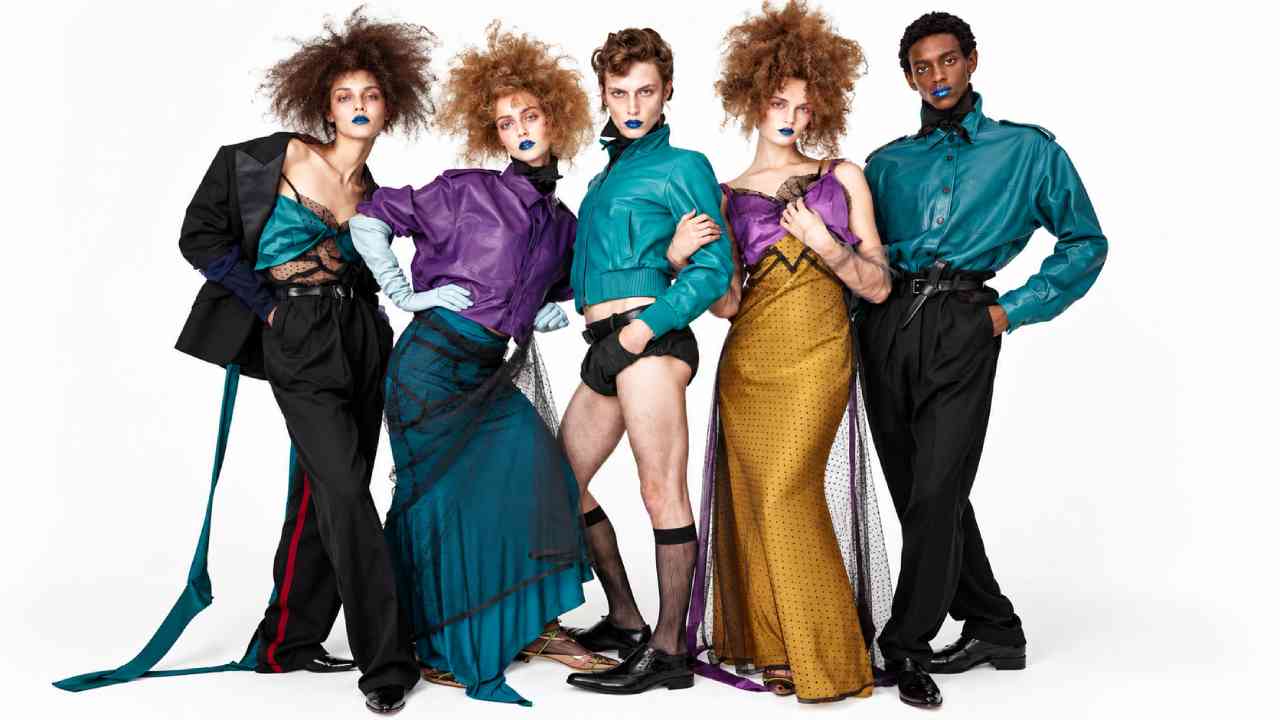
Re{form} draws on the Incroyables and Merveilleuses, the extravagantly dressed figures associated with post-Revolutionary France. Galliano also explored this historical world in his 1984 graduation collection. Here, the references return through a contemporary wardrobe. Historical inspiration can give clothing a sense of character without requiring a literal period costume. The most interesting interpretation often lies in selecting a proportion, gesture, or detail and changing its context. For a modern wearer, this creates room for individual choices. A dramatic element can suggest another era while the surrounding outfit keeps the overall appearance grounded in the present.
Genderless Design Encourages a More Personal Approach
The first installment is genderless, opening the collection to styling beyond conventional wardrobe categories. However, the label alone cannot determine whether a garment suits someone. Fit, comfort, proportions, and personal preference still deserve attention. A useful approach is to begin with the clothing itself. Consider how it sits across the shoulders, how easily you can move, and whether its shape feels natural to wear. Then experiment with the pieces already in your wardrobe. This makes personal style a practical process rather than an abstract rule. The strongest outfit is often the one that feels intentional on the person wearing it.
Accessories Extend the Collection’s Playful Character
The accessories continue the collection’s interest in unexpected forms. The Tri-Chic bag uses a pouch-like silhouette, while detachable clothing elements explore how individual parts can function independently. Accessories can offer a manageable entry point into expressive dressing. Someone who prefers simple clothing might choose one unusual bag or accent rather than a complete statement outfit. Meanwhile, a more adventurous dresser could use accessories to connect several contrasting pieces. Neither approach requires recreating a campaign image. Instead, the goal is to decide which detail adds something meaningful to your own wardrobe and which would be difficult to use regularly.
Read Also: Crimped Hair Returns as Fashion’s Unexpected Beauty Trend
Styling One Statement Piece Can Be Enough
For readers drawn to the collection’s dramatic approach, restraint can make experimentation easier. Start with one piece that interests you, then build around its shape or texture. For example, a voluminous garment might work with a more streamlined companion. Likewise, an intricate surface can stand out against a quieter background. These are starting points rather than fixed rules. Check the outfit while standing, sitting, and moving, because clothing needs to function beyond a photograph. Also consider the setting where you plan to wear it. A successful interpretation allows the design to remain expressive while fitting comfortably into your daily life.
Consider the Price Alongside Practical Wear
The published price range runs from US$29.90 to US$999. That spread makes it important to assess individual items rather than assume the whole collection occupies one price bracket. Before buying, examine the fabric, construction, fit, and care requirements. Then consider how the garment would work with clothing you already own. Designer involvement can make a piece interesting, but usefulness still depends on your circumstances. A purchase deserves more thought when it requires additional items or specialist care. Choosing carefully allows enthusiasm for a collaboration to coexist with a realistic understanding of your budget and wardrobe.
Re{form} Invites a Fresh Look at Everyday Style
The most compelling idea behind Re{form} is the possibility of looking differently at familiar clothing. An archive can become a source of questions rather than a set of designs to repeat. For the reader, that idea extends beyond shopping. You might reconsider how you layer a shirt, balance a silhouette, or combine contrasting textures. Small styling experiments can reveal possibilities without requiring an entirely new wardrobe. In this sense, the collection offers a useful fashion conversation: what happens when we stop assuming a garment has only one role? The answer depends on imagination, but also on the person who eventually wears it.